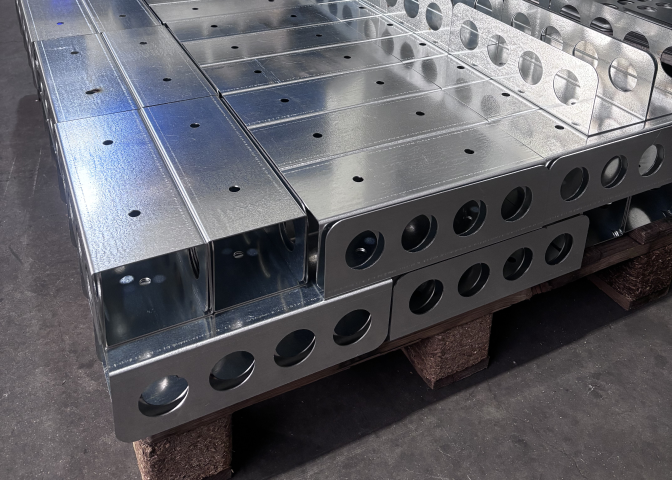
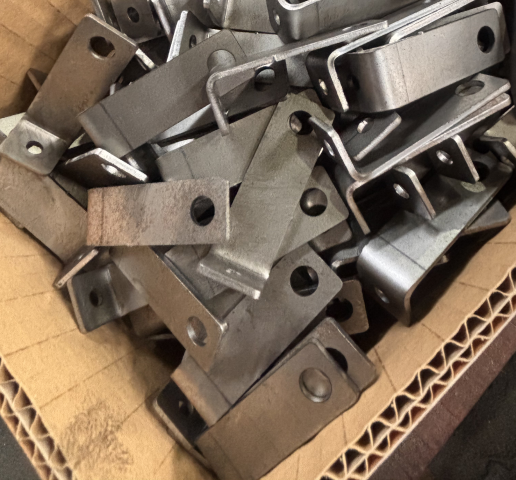
Sheet metal bending up to 160 tonnes and 3 metres

Precise, repeatable bends, consistent even on long and mass-produced parts, in steel, stainless steel and aluminium.

What does ‘quinagem’ involve?

The perfect fold, consistent piece after piece.

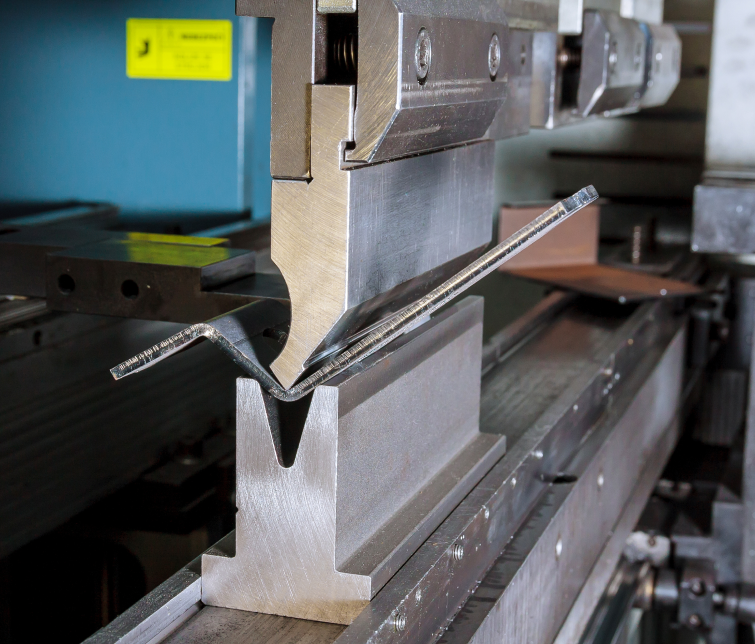
Bending involves folding sheet metal through controlled deformation, without removing any material. It sounds simple, but the key lies in controlling the force: if it is not applied uniformly along the entire length of the bend, the parts will vary from one to the next. This is where a low-deflection bending machine makes all the difference, ensuring the bend remains consistent from the first to the last millimetre and from the first to the last part. And because we bend immediately after cutting, the part goes straight from the design file to its final shape without changing supplier.
what the quinagem consists of

160 tonnes

Bending force for thick sheet metal and demanding components.

3 metres

Maximum bend length in a single piece.

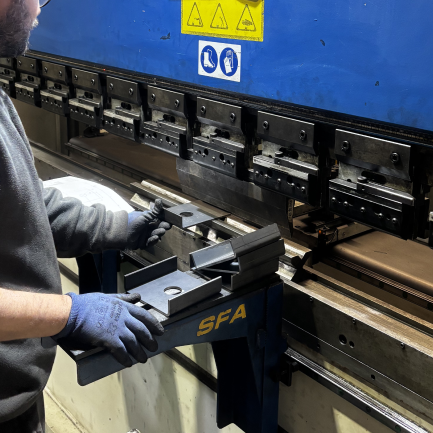
Rico PRCN Marker

High-performance equipment.

Low deflection

Optimised structure for uniform folds in long pieces.

Prototype and production run

Solutions for both one-off items and large production runs.

Steel, stainless steel and aluminium

Optimised for the metals most commonly used in industry.

tswaterjet cutting

Do you need to cut and fold the same piece?

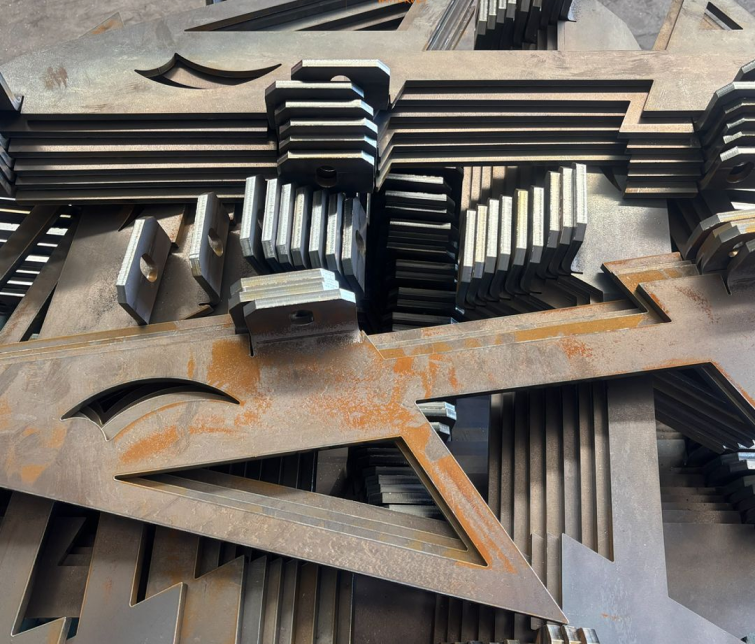
Bending rarely happens on its own. Most parts are first cut and only then bent. At TSwaterjet, we carry out both operations in-house, which avoids the need to transport the part between suppliers, shortens lead times and ensures that both the cutting and bending teams are working from the same technical drawing. From the file to the bent part, with a single point of contact.

We cut and notch the same part in the same factory, from the design stage right through to the finished part ready for assembly.

Sheet metal, precisely bent.

We stamp the metals most commonly used in industry, in thin to medium-gauge sheet form.

Why choose this one?
technology?

Accuracy and Consistency

Accuracy and Consistency

Strict manufacturing in accordance with specifications, ensuring consistent quality across all parts.

Productive Efficiency

Productive Efficiency

Reducing the number of stages and optimising production processes.

Flexibility

Flexibility

Ability to respond to different types of projects and technical requirements.

Bespoke Production

Bespoke Production

Solutions developed and tailored to the specific needs of each client.

Applications in different sectors.

Technical and Structural Components

The same production capacity meets the demands of various sectors.

The same fold,
from the first piece to the last.

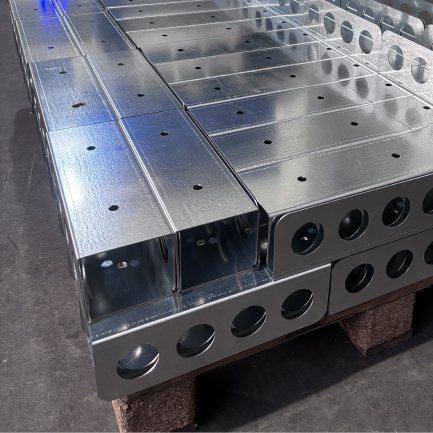
The press brake shapes sheet metal with uniform force and repeatable bends, with the same precision whether producing a single part or a run of thousands.

Projects completed
of bending

Projects carried out by TSwaterjet

Frequently Asked Questions

What are the maximum length and bending strength?

Our Rico PRCN press brake has a force of 160 tonnes and bends parts up to 3 metres in length in a single operation. It is capable of handling thick sheet metal and long parts, with the force distributed evenly to ensure the bend is uniform along the entire length.

The minimum radius depends on the material and thickness: the thicker or harder the sheet, the larger the internal radius required to prevent cracking. We will specify the recommended radius for your part in the design analysis before production begins.

All sheet metal springs back slightly after being bent – a phenomenon known as ‘springback’ – and the extent of this varies depending on the material. We compensate for this springback when programming the bend, based on the material and our experience, so that the final angle falls within the desired range.

Yes. For parts with exposed surfaces, such as stainless steel in architectural and decorative applications, we use tools and protective measures to prevent marks on the visible surface. Simply state that the surface is exposed when placing your order.

Yes, we chamfer pre-cut parts. However, when we cut and chamfer the same part ourselves, the process is quicker and more controlled, because we work from the same drawing and avoid cumulative tolerances between suppliers.

We accept both options. If you send us the 3D model, we’ll carry out the planning and calculate the bends; if you send us the drawing straight away, we’ll confirm whether it’s feasible. We work with DWG, DXF, STEP, IGES and PDF files.

Do you have a bending project?

Please send us your sketch, plan or 3D model. We’ll analyse the folds and send you a quote.